
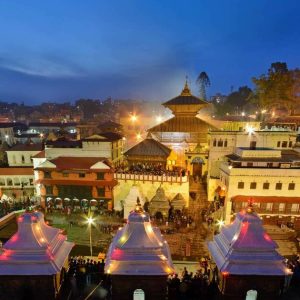
Cultures and customs vary from one part of Nepal to another. The capital, Kathmandu, enjoys rich cultural paintings. Kathmandu has served as the country’s cultural capital since the unification of Nepal in the 18th century. A prominent aspect of Nepalis’ daily life is religion. Adding color to the lives of the people of Nepal are the annual festivals that they celebrate with great pride and celebration.
Food plays a vital role in celebrating these festivals. Nepal was declared a parliamentary state on 18th May 2006. The religions practiced in Nepal are Hinduism, Buddhism, Islam, Christianity, Jainism, Sikhism, Bon, ancestor worship, and spiritism. Most Nepalese people are either Hindus or Buddhists, and the two religions have been intertwined for centuries. The Buddha is widely worshiped by Nepali Buddhists and Hindus. Five Buddhists in Dyani: Vairochana, Akshobhaya, Rathasambhava, Amitabha, and Amoghashdi represent five basic elements: earth, fire, water, air, and ether. Buddhist philosophy has suggested that these deities are manifestations of Sunya or are completely absent. Mahakaala and Bajrayogini are the Buddhist deities of the Hindu sect worshiped by the Hindus.
Nepali Hindus worship ancient Vedic gods. Brahma the Creator, Vishnu the Preserver, and Shiva the Monarch are the Supreme Hindu Trinity. People pray to the Shiva Linga, or the symbol of Lord Shiva’s penis, in many Shiva temples. Shakti, a powerful object for Shiva’s female partner, is highly respected and feared, and the other names given to her are Mahadevi, Mahakali, Bhagabati, and Ishwari. Kumari, the Virgin Goddess, also represents Shakti. Other famous gods are the lucky Ganesh, the Saraswati of knowledge, the Lakshmi of treasures, and the Hanuman of protection. Krishna, believed to be King Vishnu’s avatar, is also widely worshiped. Hindu scriptures, the Bhagawat Gita, Ramayan, and Mahabharat, are widely read in Nepal. The Vedas, the Upanishads, and other sacred texts are recited by Brahmin pundits who are educated on special occasions. Customs in Nepal’s racial diversity also open up a wide range of cultural diversity. Many of these customs are reverted to Hindu, Buddhist, or other religious traditions. Among them, marriage laws are particularly appealing. Traditional weddings require parental arrangements after the boy or girl has grown up. Cattle slaughter is illegal in Nepal.
The cow is considered the Mother of the Universe, symbolizing motherhood, love, and compassion. Respecting it is the use of the concept of Ahimsa, which in Sanskrit literally means “nonviolence,” an integral part of Hinduism, Buddhism, and Jainism. Before entering the temple or the house, you will often be asked to remove your shoes so that you do not defile your clean interior with your stained saliva. Some temples are forbidden to non-Hindus. The hand of food, considered pure, is used for food, payment, giving, and receiving. If rural Nepal is mainly a farming community, some aspects of urban life carry the splendor of the modern world. Cuisine: Eating habits vary from region to region, and much of Nepali cuisine is influenced by Indian and Tibetan cuisine. The people of Newar, however, have their own unique, large, and nutritious cuisine.
Takalis also have a different diet, although the basic foods are similar to those eaten by most Nepalese people. A typical Nepali dish is daal (valley soup), bhat (boiled rice), and tarkari (cooked vegetables), often accompanied by achar (cucumber). Preserved meat is very popular, but for many, it is kept on special occasions. Momos (spicy or fried dumplings) are among the most popular foods among Nepali people. Rotis (flatbread) and dhedo (boiled flour) are also the staple foods of some households.